- /
- ASP™ Summit
- /
- Advancing Medical Device Reprocessing: Challenges,...
- /
- Rethinking the processing of medical...
Advancing Medical Device Reprocessing:
Challenges, Opportunities, Safety & Sustainability
Why high-level disinfection is not enough for patient safety? High-level disinfection (HLD) alone does not completely eliminate the risk of microbial transmission associated with reusable flexible endoscopes. A substantial body of scientific literature demonstrates that patients may still be exposed to microorganisms originating from previous patients or from biofilms that persist within the internal channels of inadequately reprocessed endoscopes. Such exposure may result in transient contamination, microbial colonization, or, in some cases, clinically significant infection (Ofstead, 2025).
Numerous endoscopy-associated outbreaks have been documented despite adherence to recommended reprocessing practices. According to the 2008 CDC Guideline for Disinfection and Sterilization in Healthcare Facilities updates in 2024, these events have been attributed to several factors, including the complexity of endoscope designs, inadequate or unclear manufacturer reprocessing instructions, inconsistent adherence to manufacturer instructions for use (IFUs), and deficiencies associated with automated endoscope reprocessors (AERs).
These failures can allow residual organic material and microorganisms to remain within the endoscope, promoting biofilm formation. Once established, biofilms markedly increase microbial tolerance to both disinfectants and sterilizing agents, making subsequent reprocessing less effective and increasing the
Given the growing body of evidence documenting residual contamination, biofilm formation, and persistent endoscopy-associated outbreaks, the continued classification of flexible endoscopes as semi-critical devices warrants re-evaluation. An evidence-based reassessment of the Spaulding classification should consider whether certain reusable flexible endoscopes, particularly those associated with repeated outbreaks despite appropriate reprocessing, should instead be managed as critical devices requiring sterilization whenever technically feasible.

Flexible endoscopes contain highly complex internal architectures, including long narrow channels, seals, joints, connectors, and areas that are difficult to inspect or access during cleaning. The processing challenge increases after clinical use because repeated mechanical stress, chemical exposure, and handling may lead to surface deterioration, including scratches, cracks, microcavities, and irregularities that can trap microorganisms and organic material.
While effective cleaning is essential for successful HLD, damaged or difficult-to-access areas may reduce the ability of disinfecting agent to consistently come in contact with all surfaces. These protected niches can contribute to microbial survival and biofilm development. Sterilization technologies, particularly low-temperature gaseous or vapor-phase systems, may provide an additional safety margin by allowing greater penetration into complex device geometries. However, sterilization remains dependent on adequate cleaning and validated compatibility with the specific device.
Contamination of flexible endoscopes is influenced not only by the device design but also by multiple factors throughout the processing workflow.
Manufacturer instructions for use (IFUs) are often lengthy, complex, and device-specific. They frequently require numerous accessories and multiple manual steps, increasing the possibility of variation and human error. Even well-trained personnel may experience difficulty maintaining complete compliance under real-world conditions involving workload pressure, time constraints, and competing priorities.
Additional factors may include: delayed initiation of bedside pre-cleaning after use, incomplete removal of organic material, use of difficult-to-remove products such as simethicone, variability between manual and automated cleaning practices, inadequate drying, and improper storage conditions leading to microbial regrowth.
Sterilization cannot correct deficiencies in cleaning or processing practices; however, when combined with effective cleaning, it may reduce residual contamination risks and prevent microbial multiplication during storage by maintaining sterility until use.

The effectiveness of any disinfectant depends on achieving and maintaining critical parameters, including: correct concentration, appropriate contact time, adequate temperature, complete exposure of all device surfaces.
The active concentration of disinfectants may change over time due to repeated use, chemical degradation, dilution, or residual water introduced into the system from incompletely dried devices. Additional challenges may occur in automated endoscope reprocessors, where monitoring the actual exposure conditions inside complex channels can be difficult.
Although monitoring systems exist for HLD solutions, questions remain regarding how consistently these parameters are verified during routine practice. These factors highlight the importance of process control and validation when relying on HLD as the final microbial reduction step.
Many HLD agents are classified as hazardous chemicals that may pose health risks during preparation, use, testing, spill management, and disposal. Environmental controls such as adequate room ventilation, exhaust system, closed chemical delivery system may be required as well as use of personnel protective equipment (PPE).
While HLD is effective when properly performed, it requires routine handling of hazardous chemicals and strict occupational safety measures. Validated automated sterilization systems may reduce routine operator exposure to liquid disinfectants while providing an additional microbiological safety margin for certain flexible endoscopes..

Flexible endoscopes provide favorable conditions for biofilm formation because they repeatedly encounter microorganisms from patients, the environment, and the reprocessing environment.
Even after appropriate cleaning, small amounts of residual moisture, proteins, organic material, and inorganic deposits may remain inside channels and provide nutrients for microbial attachment and growth.
Some disinfectants may contribute to protein fixation under certain conditions, potentially making residual organic material more difficult to remove. In addition, exposure of microorganisms to suboptimal concentrations of antimicrobial agents may promote physiological adaptation and increased tolerance.
Biofilms provide microorganisms with multiple protective mechanisms, including: protection through extracellular polymer substances (EPS), disinfecting agent neutralization, slow metabolism, quorum sensing and genetic adaptation.
Once mature biofilms develop, complete eradication becomes extremely difficult. Therefore, prevention of biofilm formation through effective cleaning, drying, and validated sterilization strategies is essential.

According to the Spaulding classification and current CDC recommendations, most flexible endoscopes are categorized as semi-critical devices because they contact mucous membranes without entering sterile tissues. Therefore, HLD remains the minimum recommended level of reprocessing.
However, the microbiological safety margin provided by HLD is lower than that achieved through terminal sterilization. Increasing evidence of persistent contamination, biofilm formation, and repeated outbreaks suggests that the classification of certain reusable flexible endoscopes deserves continued scientific evaluation.
The question is not whether HLD can be effective when correctly performed, but whether the complexity and risk profile of certain flexible endoscopes justify a transition toward sterilization whenever technically feasible.
The main recommendation is to frame it as “increasing the safety margin by reconsidering sterilization for selected flexible endoscopes”
This is the third webinar dedicated to “Rethinking the processing of medical devices: Why switch from high-level disinfection to sterilization?”, presented by ASP Continuous Education.
23rd & 24th September 2026
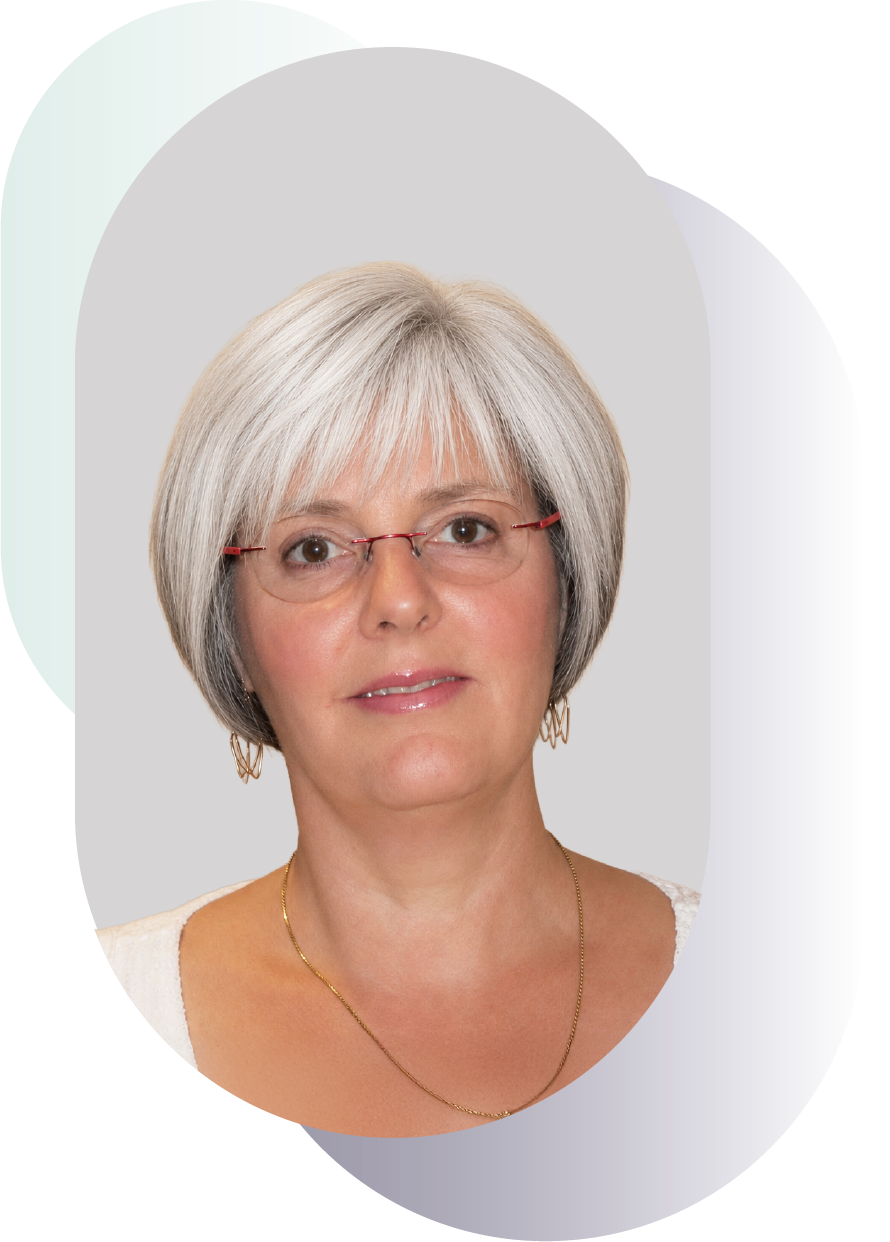
- Ph.D. Microbiologist and Chemical Engineer with 25+ years of expertise in medical device sterilization.
- Chair of Canada’s ISO/TC 198 Mirror Committee for international sterilization standards.
- Vice-Chair of the CSA Z262 Committee developing the CSA Z314 reprocessing standard.
- Co-developed two FDA-cleared low-temperature sterilization technologies using ozone and hydrogen peroxide.
- Expert in validating VH₂O₂, EO, radiation, and NO₂ sterilization processes for medical devices.
- Specialist in sterility assurance, bioburden, endotoxin, and residual testing for sterile medical devices.

- Senior Clinical Education Consultant, Advanced Sterilization Products (ASP) Canada.
- Registered Nurse with 25 years of clinical experience in intensive care and cardiology.
- Over 10 years as a nursing educator, dedicated to developing healthcare professionals.
- Strong advocate for patient safety, clinical excellence, and evidence-based practice.
- Passionate about infection prevention and medical device reprocessing (MDR).
- Active member of the CSA Group Medical Device Reprocessing Committee and the Standards Council of Canada/ISO Working Group for Biological Indicator Monitoring.
Compliance Reminder
The information contained herein is intended solely for scientific and educational purposes. It is not authorized for use in any field promotional activities and does not contain any approved promotional messaging from Advanced Sterilizations Products. This material is provided exclusively for academic and scientific discourse, including but not limited to publication in peer-reviewed journals and current available resources.